
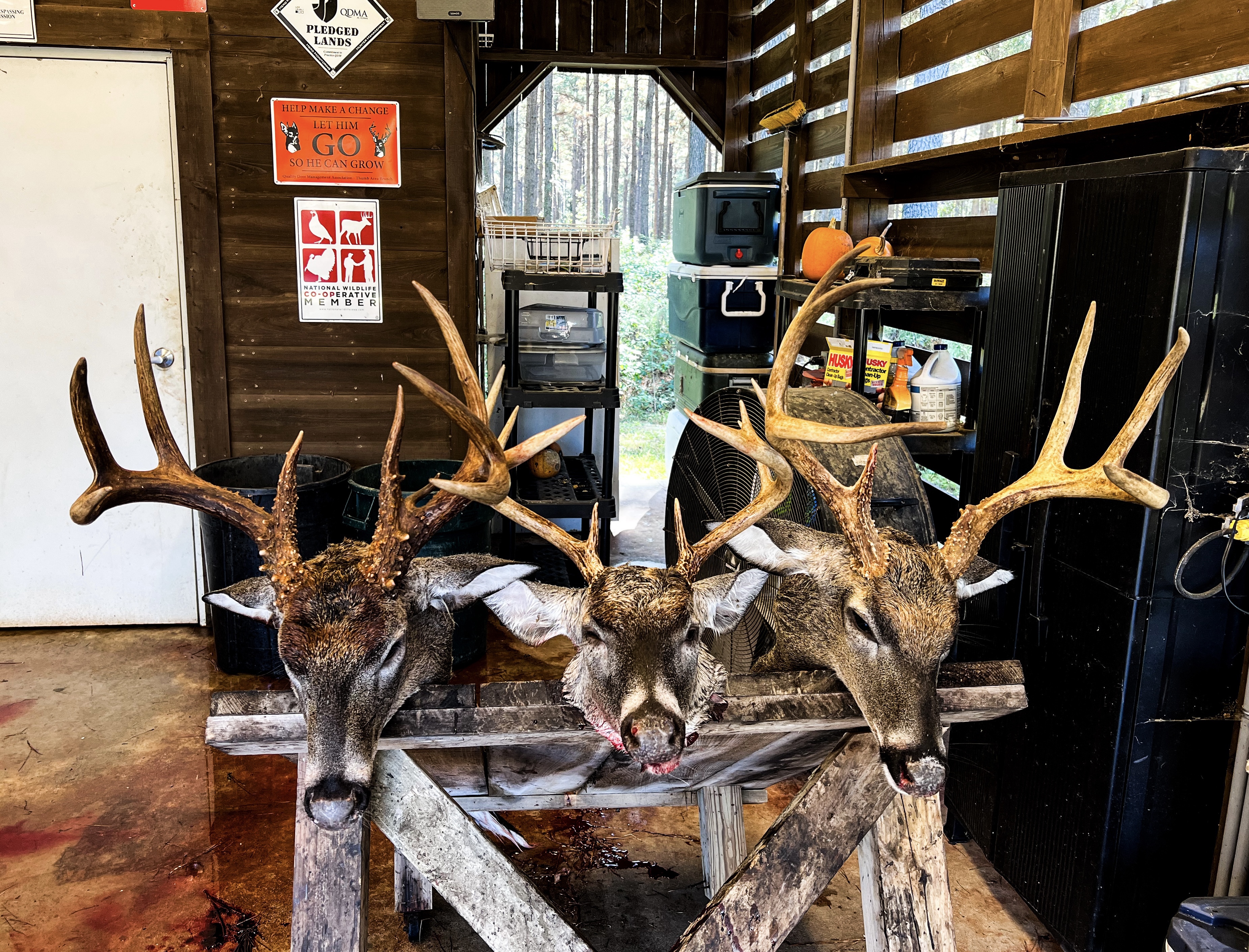
“We’ve shot all the 6pts off our land”. “Once a spike, always a spike”. “We’ve got to remove that buck out of the gene pool”. How many times have you heard those remarks from deer hunters? For me, it’s been way too many times. I believe it’s a generational issue regarding available research and data for hunters, deer managers and land stewards. Meaning, research over the past 30 years has debunked the myths and misconceptions of culling bucks. Furthermore, neither industry media nor hunting personalities has traditionally covered Quality Deer Management or science based data. That doesn’t sell products and advertising space.
What is Culling?
There are two schools of thought: 1 – removal of inferior bucks for improving genetics and 2 – removal of bucks for herd management. Simply put, managing genetics in wild herds is not achievable. One cannot alter genes of the white-tailed deer. However, much like many aspects of life, some people are reluctant to accept proven and confirmed data.
The scale of inferior bucks varies across the country. It’s highly subjective and relative to regions and hunting cultures. The majority of the time, it’s the antlers that are judged; as opposed to the overall health of the deer. Some will consider antler sets “too small” for their age. Maybe a yearling spike or a basket rack 2.5 year old. Maybe antlers with deformities – one perfect side and the other, as the late great Dusty Rhodes would say, “funky like a monkey”. I’ve also heard hunters mention seeing a 3 legged doe on camera and needing to “remove it from the gene pool”. These are all examples of variations within the species that cannot be manipulated in the wild.
A multitude of factors can contribute to the above mentioned abnormalities. Poor habitat conditions, stress, excessive heat temperatures, drought, pedicle damage, injuries, velvet damage, and late born fawns to name a few cases. These are volatile factors and will swing from year to year. A yearling spike might have been born late from a skewed Doe:Buck ratio but could easily bounce back at 2 or 3 years old with a dramatic increase in headgear from quality habitat. Drought can delay the expression of antler potential but that can change after sufficient rainfall. Velvet damage is temporary. Pedicle injuries can be minor or permanent depending on the severity. The latter is the main reason to not install antler traps on your property!
Fact or Fiction?
Multiple studies has debunked genetic culling. 19 years ago researchers at the Caesar Kleberg Wildlife Research Institute at Texas A&M Kingsville initiated a long-term research project at the Comanche Ranch to investigate whether long-term intensive culling in the wild impacted the antler scores of the standing crop. The conclusion can be read here. Takeaway: “You cannot tell how a buck’s offspring is going to look, good or bad, by looking at the sire’s antlers.” The Mississippi State University Deer Lab has found that does and bucks genetically contribute equally to antler potential for fawn bucks. It’s heritable. We know that lifetime antler potential is set during gestation. Whether the headgear is fully expressed or not is dependent on many environmental elements. However, there is one more pertinent factor to include – the mama doe. Quality milk production during the formative weeks and lessons learned for survival and browsing will set fawn and yearling bucks for a successful road to full antler expression. That’s why many biologists believe the mother doe contributes more towards antlers than the sire. These are all many reasons to maintain quality habitat for doe groups!
When Culling Does Work:
So, after that explanation you’re probably wondering when and if culling is effective. That depends on how intense you want to manage your standing buck herd. Dr. Steve Demarais and Dr. Bronson Strickland published a phenomenal resource illustrating how to break the “glass ceiling” in buck management: Strategic Harvest System. Essentially, you need to break down your buck population into 3 categories. The larger 1/3 – trophy bucks, middle 1/3 – management bucks, and smaller 1/3 – cull bucks.
Trophy bucks are ones that are 5+ years of age and have expressed their antler potential. Management bucks are 2-4 year old bucks that are anticipated to explode antler growth and progress into the top 1/3 class once they reach maturity of their growth cycle. On average, 3-4 year old bucks have only expressed 60-80% of their antler potential. 2 year old bucks have expressed 40-50%. They may be considered “good enough” while on the stand with the safety off but they can break the glass ceiling over the following two seasons.
The lower 1/3 class are considered cull bucks to be removed from the herd. These are bucks that have lower quality and lower scoring antlers. Ones that don’t appear to be fully expressing their antler potential based on their age. Bucks in this group will be 3 and 4 year olds and will be close to maturity. If they are underproducing for their age, you may consider culling them and removing from your range.
More Hunt Opportunities:

Below is an example of a 4.5yr old buck I took 9/14/23. He was heavy at 207lbs but had a very thin rack with short tines. The buck did have a nineth point shooting out under the left side but broke off while shedding velvet. Based on his age and our nutritional options and overall habitat, the antler set should have been heavier and wider. That’s not to disparage the deer. It was trophy for me. The buck checked several boxes to remove from the range. I successfully found his trail connecting nighttime feeding and daytime bedding. He skirted along a spring head runoff just as first light hit. My only feasible approach to setup a climber that morning was to cross his projected path. That is something I wouldn’t normally do but it paid off. Just because we cull bucks doesn’t mean we aren’t pursuing them as the ultimate prey species. Allowing bucks with better antler growth to flourish and increasing hunter opportunities are sound management decisions.


Why Culling Early Makes Sense:
I mention the following scenario to hunter’s who are reluctant to shoot does early and often. If your annual goal is to harvest 10 antlerless deer from your land, would you rather shoot them as early as possible or at the end of the season? If the 10 does averaged 105lbs each and you delayed harvest by 60 days, that would be an estimated 4,410lbs of browse, mast, crops, forbs and other food options that could have been consumed by your carryover population going into the next year. Pregnant does and the bucks that are maturing to trophy status. That’s a high quantity of nutrition that is essentially wasted on deer that are set for culling. As opposed to the nutrition being utilized for next year’s fawn cohort and the buck population as it rebounds from breeding season weight depletion. That’s the management philosophy of the lower 1/3 buck class. Take them out, enjoy the pursuit and memories, and create a better space for the remaining buck crop to thrive.
Challenges & Hurdles:
This method of culling certainly has challenges. The top level hurdle is restraint from “high grading” 3.5yr olds. I have shot many middle aged bucks and likely will kill many more in my life. As a hunter, when my heart is pumping and adrenaline takes over it’s hard to pass on a 3.5 year old that I’ve cold called into a tight area. However, if I’m sitting on a field it’s very easy to keep the safety on. The easiest way to curb this is by understanding body size to accurately age deer on the hoof. Keep in mind you must consider the timing of your observation relative to whitetail behavior during the fall. Specifically, during August – September bucks can easily be aged with their summer weight in full glory. October – December aging can be a little more complex when bucks cut weight during breeding season. Summer bellies are gone and hard rutting bucks will be run down physically.
Another reason to cull the lower 1/3 age class is that letting them have birthdays does not mean you’ll be crawling with 4, 5, and 6 year old bucks down the road. You will absolutely have older deer within your herd but with age comes wisdom and mature bucks are wily, cunning and smart. They stick to tight core areas and know exactly when does are in heat. They’ve survived many long hunting seasons and in my opinion they do not forget hunter travel routes, permanent stands and long time trail camera sites. By culling the lower 1/3 you will increase hunting opportunities, provide higher quality habitat and thus promote better antler growth for the standing crop and improve antler potential for future buck fawn cohorts.
I’ll leave you with a prolific quote that certainly applies for culling deer to increase health and antler quality: “I’m the cream of the crop and the cream always rises to the top” – Macho Man Randy Savage.

Leave a Reply