
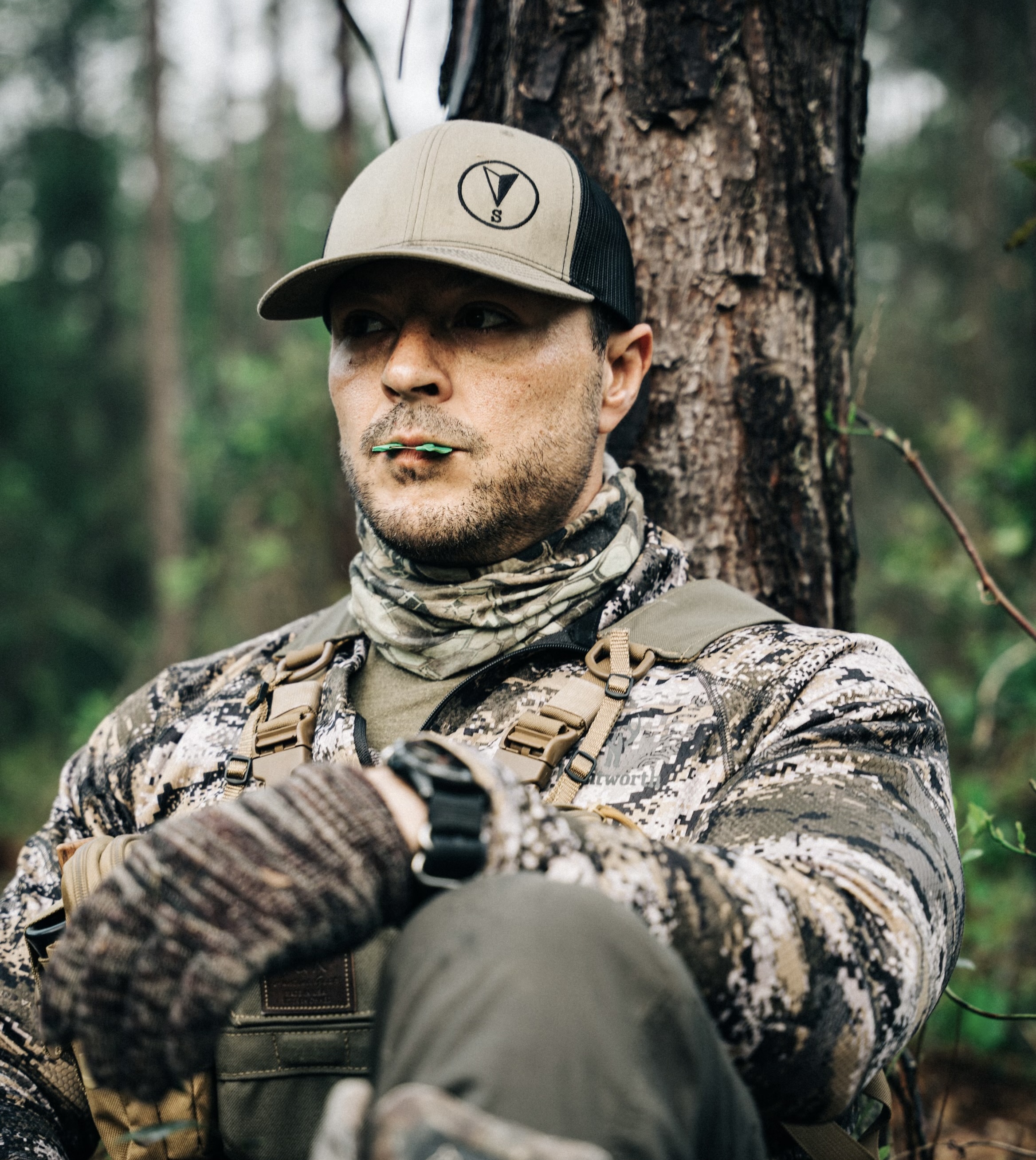
By Rick Hall
One thing about hunting public land is that you do a lot of walking…I mean a lot. That really doesn’t bother me and I have learned that the technique of walking longer distances to your stand is somewhat of a lost art. Don’t get me wrong, I think ATVs and off road vehicles are awesome and certainly have their place. For a lot of hunters they’ve offered the opportunity to hunt more and more comfortably, perhaps even extending hunting careers for some as knees and backs wear out. That’s a great thing and I am all for technology helping us advance where possible. For those of us blessed to still have good knees and strong backs though, walking or biking can be one of the best tools in your bag. If the other hunters on your lease are all motoring around, right at daylight, again a few hours later as they head back to camp, only to repeat in the afternoon and at dark, there might be an advantage to parking a little further away than normal and hoofing it in. I hear guys say regularly that “the deer get used to it” or “the noise doesn’t bother them” as it relates to riding on the property, and that can be true to an extent. I firmly believe however that if you are chasing mature bucks, then you are significantly hurting your chances by driving as far in as you think you can, just to limit the walk. A big buck might get used to the noise, but he’s likely going to do so by changing his patterns to more nocturnal routines, or just exiting another way, especially once deer season begins and he realizes he’s now being hunted. You may have had him on camera 15 minutes after leaving the feeder on your atv or truck during the summer because it’s not deer season and he’s not really being pressured. Mature bucks have that sixth sense though and it only takes a few trips to the stand once the season begins to alert him that something has changed.
Similar to using quota or lottery systems to keep pressure at a minimum on public land, many governing agencies also use techniques to limit pressure on individual portions of these management areas. One such technique is the use of “Walk In Only” areas. This is basically just a block of land within the public property that is closed to motorized vehicles within designated boundaries. Many times, these are big blocks with hiking or biking being the only methods able to get you significantly further than most hunters. These are undoubtedly some of the most productive areas on public ground that I’ve found. Conversely, I see the same impact on the private land I hunt, in which deer sightings seem to increase in areas less traveled by vehicles. One particular piece of private comes to mind, a small 85 acre tract in AL. It’s a square block, landlocked in between several large tracts, leaving a mile drive from the paved road to the gate of the property that I have permission to hunt. The entry gate is actually an old cattle gap and in previous years I would drive my truck all the way to and through that gate. The cattle gap was old and sounded like an alarm to all animals within 100 miles of the place, letting them know that I was there. While I still saw deer, I couldn’t help but wonder if that was impacting anything, since there was rarely anyone else other than me crossing that cattle gap, meaning the deer were not regularly used to the sound. I put that question to the test in 2021, leveraging an electric bike to access the property instead of my truck. With the bike, I could cross the gap silently and I absolutely saw a difference. I saved this tract until the rut, and the deer were running crazy each and every time I went. I hunted within the same areas, same time of year, and very similar conditions as I had in the past, but I firmly believe that I saw more deer there this year because I biked in instead of taking the truck. Since then, I’ve had several awesome encounters and even harvested deer within 50 yds of that gate, with the bike laying on the ground next to it.
Another huge factor in access, is making sure you’re taking the right route, not the easiest route. Avoiding bedding areas or heavily used trails to and from the stand are crucial, as is understanding the wind direction along your route. Roads are great and extremely convenient for access, but they may not always be the right choice. Think about the times you’ve spooked deer, where they’ve been and why they were there. Take a look at maps and get creative on what may be the best way to access your spot. There are also times where you may need multiple routes, allowing you to play the wind on the way in, or not spook deer as you leave that may have gotten by you earlier in the hunt. If your goal is a mature buck, this aspect cannot be overlooked.
The last point here is timing of access, both entrance and exit. Hunting both public and private land, it’s clear that most hunters will be making their way to the stand somewhere between 15 minutes before or after first light. I myself have fallen into that trap more times than I care to admit. There are times where you need light to access a spot, especially in public land that you may not be very familiar with. However, most of us, specifically on private land, usually know where we are going each time we set out. We have the tree picked out, the stand set and know exactly how to get there. In these situations, I typically try to be in the tree around an hour before legal shooting light, sometimes earlier. I started doing this a few years ago while hunting public land in Kentucky in an effort to ensure no other hunter beat me to my spot. What I noticed is that I was seeing more and more deer doing this, typically right after legal light. Had I not been there so early, I likely would have run these deer off walking in or setting up and potentially ruined the entire hunt. In November of 2020, we were facing some tough hunting conditions on a national forest in KY. With one day left in our trip, I decided to jump into a spot that had been productive in years past. I was in my tree at least an hour before sunrise and within 15 minutes of legal light I had a gnarly 5 ½ year old 7 point cruise through. I was fortunate enough to get an arrow in him, watching him crash about 50 yards away. Had I not been in the tree so early, I may not have seen this deer, potentially running him off on my trek in.
Afternoon hunts are similar, and I try to get in way earlier than most. There’s nothing worse than running deer off in the afternoon, hearing them blow and crash as they leave, effectively killing my chances at a good buck. To avoid that, get in early! Somewhat along the same lines, is staying later in the morning. We all talk about mid-day movement and usually will relate that to the rut, but as hunters begin leaving the woods in mass between 9-10AM, I find that 10:30AM – 2:00PM can be extremely productive on pressured land, simply because the deer have altered their routines in response to the pressure they’ve felt as hunters continually access the woods.
Hunting pressure in general is something that cannot be avoided in most cases, but there are ways to mitigate it and in turn, be more successful. Think about access on your property, to your stands and your current approach. Are there ways to improve? Probably, and probably not as hard as you would think. Walk a little longer, wake up a little earlier, or just rethink your route. If you’re not as successful as you would like to be, there’s likely ways to get better and something as simple as walking could have huge benefits.

Leave a Reply