
By Rick Hall
Currently as I write this, I am also reading Precision Bowhunting a book by a father and son duo John and Chris Eberhart. Both have published articles for many well-known magazines and websites over the past few decades and are well known for their success on pressured lands, both private and public. While the book was written almost 20 years ago, it’s built on the foundation of dealing with pressure and that may apply even more today than ever. In Precision Bowhunting they provide data backed evidence that clearly shows the impact that hunting pressure (total number of hunters in a given area) has on success rates and mature deer numbers. I won’t go into the data specifically here, but the point is hunting pressure may be the biggest, most important factor in killing mature whitetail bucks.
Public land gets a bad reputation for excessive hunting pressure and there are certainly areas that get hammered constantly by hunters. There are also some that aren’t pressured nearly as much for a multitude of potential reasons. The two previous statements are also true for private land. We tend to think that because we are in a club or hunting a family tract that our deer aren’t as pressured as the neighbors, and certainly not as pressured as deer on public land. I beg to differ. In most rural areas that I am familiar with, especially in the southeast, it’s difficult to find any gate, on any road that doesn’t have a truck pulled into it during the hunting season. Most of these rural areas are consistent in their makeup with lots of different landowners with parcels ranging anywhere from 3-5 acres up to a few thousand or more. When you look at these areas from an aerial photo, they really compare well to some public hunting areas; large chunks of land with many access points for many different people. So while you may think the deer inside of your property line aren’t that pressured, once you zoom out and look at the bigger picture, you’ll likely realize there is pressure coming from everywhere.
If hunting pressure is coming from all directions, how do you deal with it? In my opinion, there are two main ways to do that. First is limiting when and how often a place is accessed. The other is limiting or changing how you access those places. In the rest of this article I’ll talk about the former and cover the latter in the next issue.
Here in FL, we have a lot of public hunting opportunities, with some only accessible by lottery drawing or “quota tags”, and other areas that are available without special permits. In my early days of hunting public land I chose to hunt areas that did not require a lottery or application to hunt. However, I’ve become a fan of the quota areas more over the last few years. The reason? Less pressure. Period. These places, while public, are regulated so you know exactly how many other hunters will be there too. Most of them often have specific dates for their hunts as well, leaving multiple weeks throughout the season with no hunting pressure at all. I’ve recently been thinking about how the same philosophy could be implemented in a private land or hunting club situation. Most clubs allow members a set number of stands or a specific parcel within the club to call their own. These practices were set to limit pressure as well, but they may have slightly missed the mark. First, if you’re paying for a lease or dues, shouldn’t you have access to all of it at some point? Second, if the same people are hunting the same spots over and over, on the same schedules, are you really maximizing the opportunity for success?
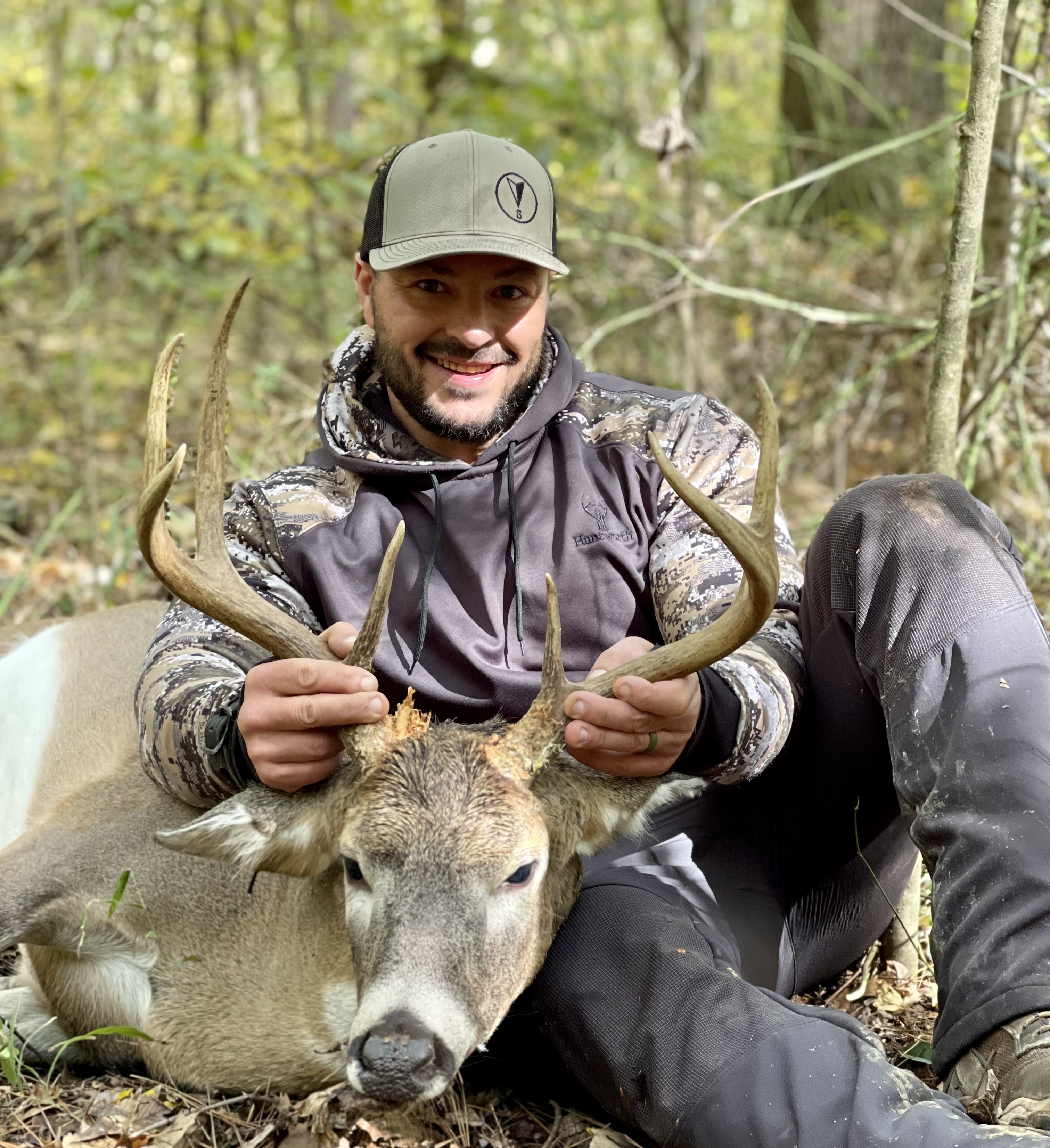
When I was 18, I used part of my graduation money (ok, all of it) to join a local hunting club. This wasn’t any club though, this was a well-established bowhunting only club. There were 10-12 members each year that successfully shared 1200-ish acres. The President of the club was my cousin, and looking back he may have been a pioneer in this hunting club pressure thing. Instead of limiting stands or areas to specific hunters, he segmented the property into zones. A few months before the season each year the members would get together and draw to determine which zone they would start their hunting season in. Once the season began, each member would have their zone for 2 weeks, then would all rotate to the next zone for the following 2 weeks, and so on until the end of season. This allowed each hunter to hunt the entire property, getting at least 2 weekends in each. Because we all had different schedules and hunted differently, no section was pressured the same as we rotated. In my first year as a member, on opening day of bow season in fact, I was fortunate enough to arrow a wild 140” non-typical 14 point buck, one of my best to date. I was able to capitalize on his early season feeding pattern because even though this was a club, I was the only member hunting this zone, which kept preseason scouting pressure down. I actually had a visual encounter with the deer a week prior to season and knowing that he would not be pressured by other hunters before I was able to hunt him was great for my confidence and ultimately led to an unforgettable hunt. We went on to harvest quite a few big, mature bucks over the course of that club’s existence and I think the zone rotation practice was one of the leading contributors in that effort.
The FL quota system and zone rotation are just examples, but they are great examples of how both public and private land management leaders have been creative and successful at limiting pressure and providing better hunting opportunities. Ultimately, you’ll have to figure out what options are best for your situation. Maybe it’s a rotation like we had in the bowhunting club, maybe it’s 2 weeks off the property after opening weekend of gun season, just to let it rest while your neighbors are still hammering their place. Maybe you do hunt a club that limits stand numbers or acreage you have access to. Use that and pressure from the other hunters in the area by limiting your access to only the perfect times or when others are not around. If you think pressure could be limiting your success, begin focusing on that and brainstorming ways to limit pressure in certain areas or during certain times.


Leave a Reply