
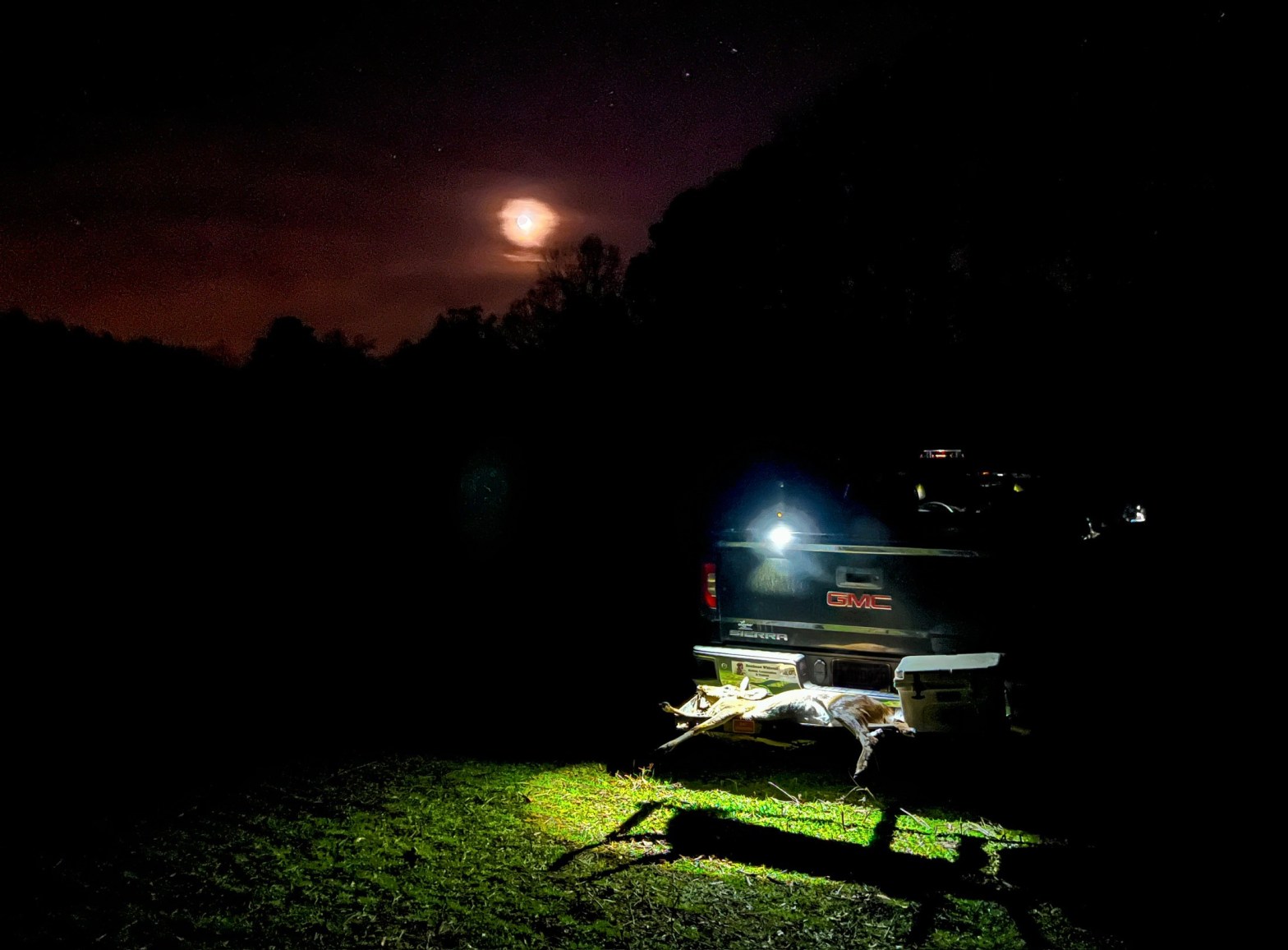
Localized peak breeding dates are nonexistent in hunting media. Oftentimes, it’s not even close. Mostly because outlets generalize entire regions or even the country as a whole. Ask yourself this – how could one label the entire Southeast with set dates? Well, it happens every year even though there is a tried-and-true QDM practice to pinpoint your exact local breeding dates.

Local does go into heat the same time every year but the timeframe absolutely varies within states. Some states will see a difference of weeks to even months apart (Florida, Georgia, Alabama, Mississippi & Louisiana).

So, why do we see generalized breeding dates for the entire South from hunting media? Your guess is as good as mine.

The above post from Realtree on 10/25/23 is an excellent example. The South absolutely has late October breeding. That is peak breeding at my South Carolina farm. In fact, a 3 year old doe was shot last night (12/16/23) that was bred 10/22/23. The majority of our does are bred the last week of October. Two nights ago, we recorded a milestone harvest at the Farm: a 77lbs fawn doe that was bred 11/2/23. That is a sign of quality habitat, a healthy herd and it shows us that some fawns are being bred earlier than we previously thought. This data will advance hunters with high level intel to target and kill mature, quality bucks.

So how do I determine conception dates from the skinning shed? Thanks to Mr. Joe Hamilton, biologist and conservationist, a readily available and inexpensive whitetail fetus scale will accurately pinpoint this data. Through years of research and compiling data, Mr. Joe created a groundbreaking management tool that indicates exactly when the doe was bred. As you collect more data points over years of herd management, the more fine-tuned your statistics will be.

In most Southern states the season ends well beyond peak breeding. 35 days post conception is needed to utilize the scale. Therefore, late season doe kills should be evaluated for pregnancy. With a doe hanging by its hind legs the reproductive tract will be below the bladder and outside the intestines. You will see a pinkish, soft sack. I prefer to remove the tract and place on a cutting service to gently open the sack and remove any fetuses. The larger the reproductive tract, the larger the fetus. Take extra caution with smaller fetal sacks and make sure to separate the umbilical cord. Twin and triplet fetus lengths should be averaged for the conceived date.


Based on recorded conception dates, you will establish a baseline of when does are receptive. The week prior leading to said dates is prime time to witness bucks prowling for hot does. This method does not only benefit landowners but also public land hunters. If you’re racking up public land miles, why wouldn’t you know precisely when does are bred?


For additional discussion, please listen to episode 45 with Dr. Bronson Strickland and check out the MSU Deer Lab.

Leave a Reply to Walk the Woods Now to Kill Bucks this Fall.Cancel reply