
With Georgia now in the CWD mix and South Carolina being the last Southeastern state without a confirmed case, I have some thoughts to share on herd management. These are my own viewpoints and ideas as a deer manager. A common sense proposition to consider for realistic management.
The main concern of Chronic Wasting Disease is death. From what research has shown, it’s 100% fatal in infected deer. Sometimes it lays dormant for years and other times it happens quicker. Sure, everything alive will eventually die but as we know from managing deer, health produces the best quality whitetails and that’s our goal.
How do we handle disease management to prevent a decline of White-tailed Deer? First, we cannot control a disease within wild herds, nor can we eradicate it. Despite what some may claim it’s simply not possible. However, we can attempt to mitigate impact.
Population reduction has been a tactic to combat CWD in many states and I continue to see people stand behind managing low populations to slow the spread. At first glance it may seem sensible but when whitetail behavior and the species biological drive is accounted for, how could this be a realistic plan?
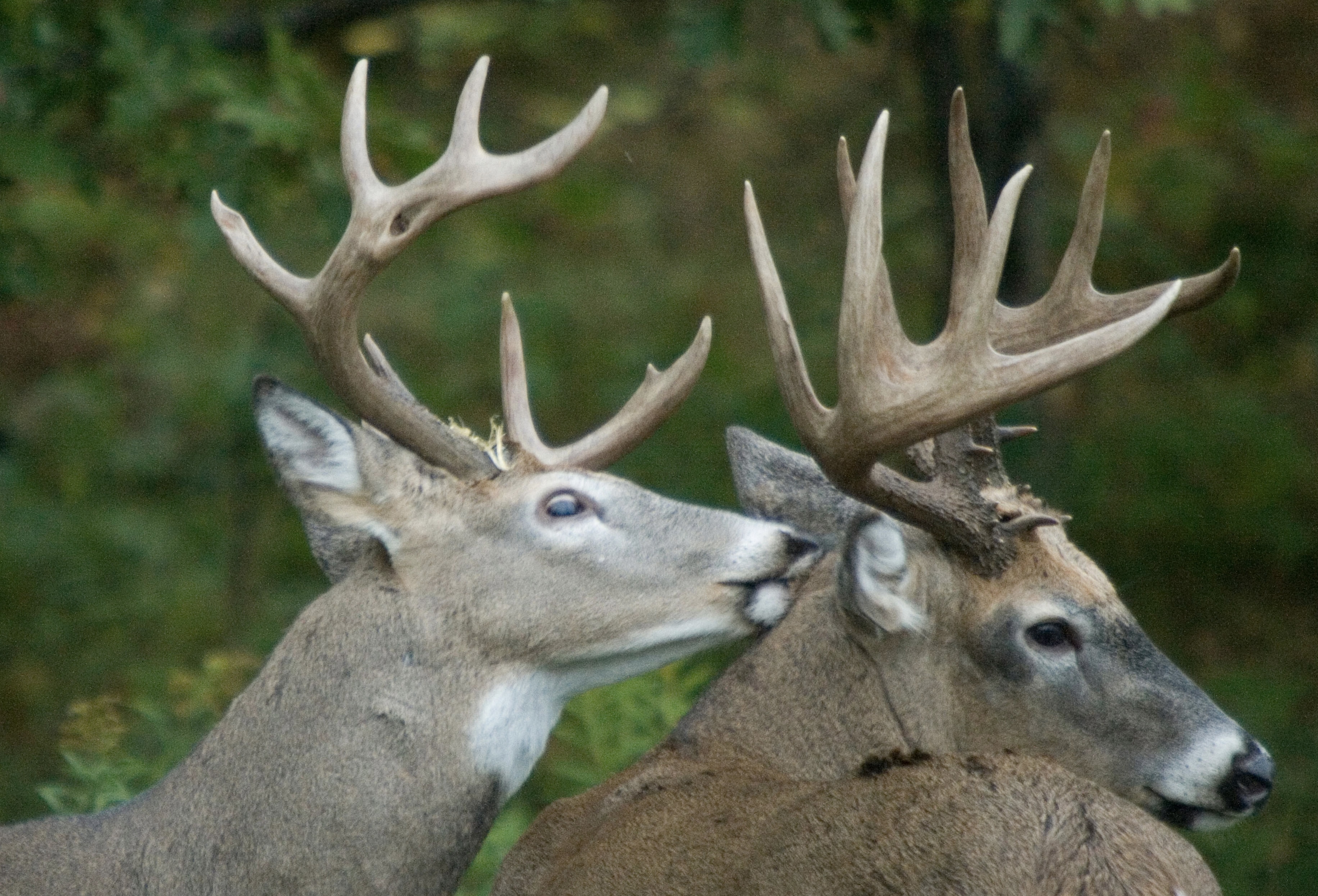
The idea is to kill off deer to a very low per square mile number. A dramatic decrease in whitetails should substantially slow the spread of CWD, right? No, it won’t and here’s why. Deer are a highly social species, and they do not live in isolation. Breeding season connects the vast majority of any given herd size annually in an exceptionally social manner. From pre-rut activities to the last estrus cycle. Bucks spare, fight, lick each other and directly interact during breeding season. Not to mention the obvious contact with females of all ages. Keep in mind fawn does can reach sexual maturity their first fall if they’re born on time and healthy enough. Signposts have also been proven to spread CWD. Scrapes can pass the disease to deer as both bucks and does, paw, urinate and chew on licking branches.
Hunters and conservationists can eliminate feeders, bait piles, mineral blocks, and even destination food plots but will that slow the spread? It’s not going to hurt but it’s also not going to stop the disease. Deer are biologically driven to continue the species, and we are not going to alter behaviors and breeding season activities.
Let’s say we reduce a population of 100 deer/ square mile to 10 deer/ square mile. How does that slow the spread? A non-hunter will likely believe it should based on the spatial distance created. However, once they understand annually deer behavior, it’s all a wash. 10 deer per square mile will connect just like a higher density during the breeding season, just not as frequent. I would argue this situation would increase buck travel and counteract the goal of low herds. Furthermore, how would predation effect a low-density management plan? How would it effect age structure? How would it alter a mother doe teaching her fawns how to survive? Would hunters be able to harvest enough to effectively decrease to extreme numbers within the legal season? Furthermore, would private landowners that have decades upon decades invested in sound management and conservation be willing to roll the dice on a questionable plan?
We also must realize groups within herds are extremely close. We should presume if one deer in a doe group has CWD then they all have it or have at least been exposed to it. Licking and grooming one another, proximity of bedding and eating together all contribute. The same applies for bachelor groups. When testosterone plummets, antlers fall and bucks form into groups for safety. They remain in groups until the following fall when testosterone begins to spike. There are of course outliers that live alone but mostly all whitetails live among other deer and survive better this way. Outliers are social throughout the year and breeding season.
So, what is an effective management plan with CWD present? The official stance of Southeast Whitetail is to bring it on home to the fundamentals and principles of Quality Deer Management. I’ve written about this numerous times and again wonder why, with a disease at question, are we not circling the wagons back to QDM?
If death and population decline is the ultimate concern, we must establish a solid baseline of localized densities and fawn recruitment rates. Not statewide, but rather by counties or clusters of them with similar habitat. Very quickly, we’ll see population trends and understand exactly what CWD is doing within infected areas and potentially identify new areas of infection. We’ll also learn how devastating or minimal the disease actually is on local herds. Real data and real knowledge that will give us the upper hand for management. Without data sets, are we merely guessing at herd health?
Deer managers rely on extensive annual data collection to determine effective plans to produce quality whitetails. I would hesitate on lowering herd numbers as a preemptive tactic to slow the spread. Especially, if we don’t have a localized baseline of data to show how the disease is affecting populations.



Leave a Reply