

Big Boss Man, Ravishing Rick Rude, Bocephus. Just a couple of bucks that were captured on camera but never made it to the wall. Hunting specific bucks has both rewards and challenges. It became an obsession from 2015-2022 but I began to drift away from that style of heavy in-season camera use and planning hunts for specific deer that may or may not be around. It’s a chess match to pursue a particular whitetail but I wanted a new quest. A thought to go in with zero camera use and simply utilize fresh sign, landscape features and deer behavior for encounters with mature bucks.
Life changes and so does time spent in the woods. I certainly log numerous hours every season but it’s much more difficult to plan far in advance. I’m mostly an opportunistic hunter not worried with temperatures, moon phases or time of the season because deer are always moving and always doing something. Work, two young kids and life consumes most of my time and chasing one specific deer is not only impractical, but it became monotonous. I’m a hunter at the core and walking in with a “hang & hunt” stand and dragging out a deer is my current mindset. The Method Stage. Being able to kill a buck at any point during the season without altering their natural movement, using corn or cameras, nor sitting on a food plot has been my focus over the past two years. Woodsmanship would be the measuring stick to test my abilities. Not for outsider praise but to gauge my skillset as a woodsman. I’m not looking to catalog bucks and pick the top Boone & Crockett score but rather to enjoy the process and revel in awe of what might step out.
Landscape Usage
Understanding your hunting ground and how deer utilize the landscape is the first step. Preferred bedding sites change throughout the season with temperatures. Food options are constantly shifting with availability. This season we saw loads of acorns fall early from Hurricane Helene and the delayed first frost kept deer away from destination food plots as forage options were still green in the woods.
The Southeast is not inundated with pinch points and funnels, but you can still find unique hunt opportunities within pine farms, not to mention water systems. Below is an example of a Georgia pine farm I hunted 11/17/24. I had never been to this area but knew it would be a solid travel corridor for buck movement. A hardwood drain surrounded by young pine thickets. A site I chose the night before by using Google Earth.

I walked in before daybreak with my climber, rattled about an hour after first light and shot a 4.5yr old 6pt that eased in quietly within 90 minutes of the sit. Based on the aerial, I knew this would be an ideal rut setup for a buck cruising for the smell of estrus.

Behavior & Biological Drive
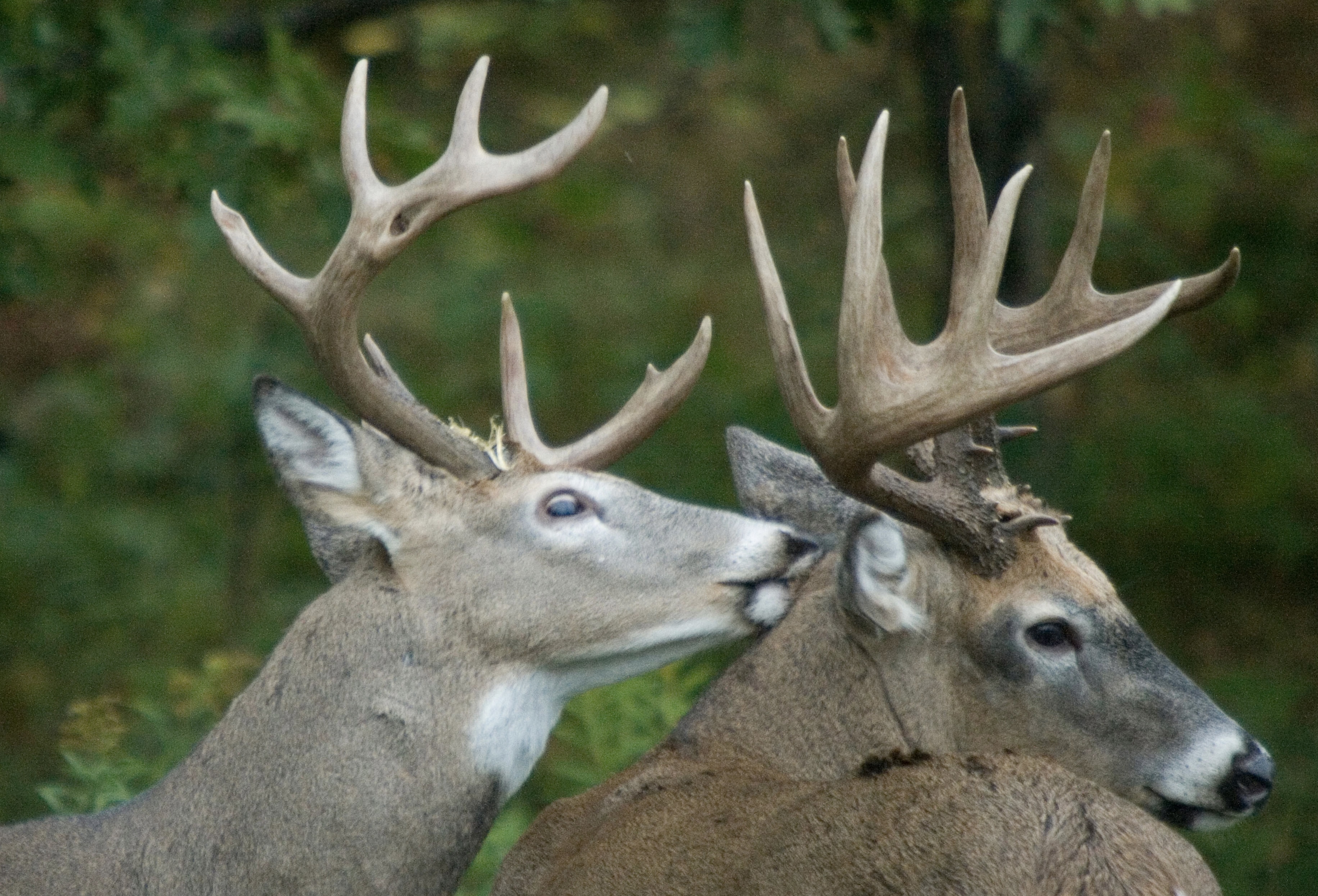
Deer behavior shifts throughout the season. Early season it’s all about eating and hiding. Moving from point A to point B. Once velvet peels and antlers go hard, bucks begin to separate, establish dominance, and make sign. Pre-rut moving into early estrus cycles is the first stage in the breeding season and it’s when I love to hang from a tree. Bucks are extremely active and searching for hot does. This is when they fight the most, right before peak breeding. An ideal time to rattle antlers and draw in a curious buck or the local dominant male.
This was my plan 10/14/24. Historically, the site below has always been full of buck sign, and I wanted a spot adjacent to where bucks would be at dusk. Knowing that the earliest breeding dates are mid-October for my herd, this was perfect timing to target a buck. The specific location combined with wind direction proved to be deadly. When responding to a rattling sequence, bucks always circle in downwind and climbing adjacent to the cutover meant a buck would slide in a little shy of perfectly downwind as they like to have visibility enough to bound from danger.

I rattled hard and loud every 15-20 minutes for the last hour of light. Right at final closing a snort-wheeze took me by surprise over my right shoulder. A 4.5yr old 9pt slipped in tight within 15 yards. We wanted to engage in a fight but didn’t see another buck. He paced around for a bit which provided an opportunity for me to stand up and turn his direction for a double lung shot. A lethal hit but it was high. Minimum blood, but it didn’t matter. A dead rutting buck always reveals its final resting spot when you’re downwind.

Hunt Smart
This sounds obvious but it’s way too easy to overthink setups or completely miss golden opportunities. Hunt based on wind, recent hunter pressure, and where deer will be; not where you want them to be and there is a difference. You’ll always have an upper hand with a solid foundation of deer behavior.
October 1, 2023, I conducted an impromptu scouting experiment sparked by a busted hunt. My plan A, B and C all failed with swirling, warm temperature winds. Frustrated, I gave up and decided to walk the woods, cover substantial ground, and observe deer movement. Slipping methodically yet at a fast pace. What I learned – deer were moving in areas that I did not expect. Especially from a neighbor’s timber block. As I was wrapping up the evening at gray light, I walked around a creek bend and right up to a quality buck hitting a scrape. He immediately saw me and bolted uphill. He was a fine buck and based on the time of day and his location, I knew where he was bedding and where he was heading. I knew then I wanted to hunt this whitetail and I wanted to call him in by rattling.
I waited two weeks until the wind was in my favor to hunt the creek side ridge. Friday the 13th, a day to kill. I setup beside the uphill trail he took leaving the swamp two weeks prior. If he was in the area early October, he would certainly be around mid-month right before breeding season fires up. I rattled lightly and with short sequences as I didn’t know how deep he held up within the bottomland. An hour before dark, he eased out. There he was the buck I locked eyes with at ground level but this time I was elevated with the wind in my face. He dropped immediately with mud-colored legs. A swamp buck in full glory.

Historically Well-Traveled Trails
Mid November 2023 I became frustrated by the lack of recent deer seen. Breeding season brings ebbs and flows with observations, but I was trying various approaches and locations to kill a deer. Doe, buck, whatever steps out. Whitetails are always moving and becoming nocturnal is a myth. Deer still move but rather they avoid hunters, pressure, and trail cameras. A trait perfected from millions of years as a prey species.
The night prior I was texting with a hunting buddy and told him I was going to kill a buck the following morning. I was on a mission. Taking a step back, I reminded myself that bucks should be on the hunt searching for remaining does in heat. Fewer numbers would have bucks on the hoof. What better time to hunt a historically well-traveled trail. A mature pine highway connecting three separate bedding thickets. Sweet gums had grown higher than desired for visibility but that wouldn’t impede movement just my line of sight. Such a tight window that I didn’t see him walking the trail until 30 yards from the base of my tree. I was angled just about straight down as he was roughly 10 yards from my tree and set to pass underneath me. This is a perfectly fine shot to take with a rifle, but you must envision the internal path of the bullet. I placed it between the right shoulder and the neck so damage inflicted would include the lungs and potentially the heart. He turned around and fell. A weathered 7.5yr old who expressed full antler growth the year prior.
I had some history with this buck even though I wasn’t currently running cameras. He was a substantially wide 8pt in 2022. I hosted a couple of hunters that year during velvet season and by using cameras I knew where we bedded and where he liked to feed at night. An ideal scenario for my guests to have a successful morning hunt. They saw the buck traveling back to bed after daybreak, but he was out of reach at 75 yards with a bow. That was the last I knew of the buck until I killed him. It made sense why he was on that trail and further solidified a reason to leave the area alone until select times during breeding season.

Conclusion
The past two years have been much more enjoyable as a hunter. Stripping down to the basics with limited technology and intel on specific bucks. Not hunting for inches or the glory grip-n-grin but for the challenge and experience. One major drawback is not having an inventory of the buck population and not closely monitoring management efforts to produce the highest quality whitetails. I’m fully aware of this and will be shifting back to camera usage this year. The change was nice but it’s time for a new challenge. Maybe there’s a 160” buck ready to be named….
Leave a Reply